Blog

Server Rack Cable Management in Dubai

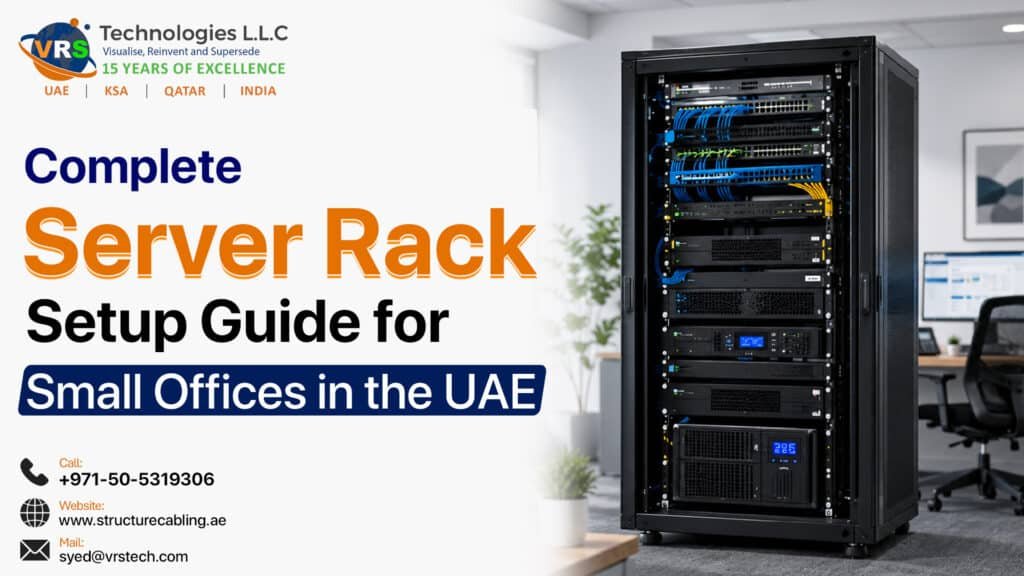
Complete Server Rack Setup Guide for Small Offices in the UAE

Complete Server Rack Setup Guide for Small Offices in the UAE Read Post »

Your business is growing. More employees. More data. More applications. Suddenly, a single computer under someone’s desk is not enough to handle everything. You need a proper server. But setting one up can feel overwhelming. Racks, cables, cooling, power, where do you start? Many small office owners get stuck at this point. They delay the setup and their IT infrastructure suffers. VRS Technologies LLC provides professional Server Rack Installations in Dubai and helps small businesses build reliable, scalable server environments. What Is a Server Rack and Why Do You Need One? A server rack is a metal frame designed to hold servers, networking equipment and other IT hardware. Instead of stacking equipment on a desk or shelf, you mount everything neatly in a secure cabinet. Benefits of using a server rack: Keeps equipment organized and secure Improves airflow and cooling Saves floor space in your office Makes maintenance and troubleshooting easier Allows for future expansion Planning Your Server Rack Setup Before buying any equipment, plan carefully. Measure your space – Ensure there is enough room for the rack, including clearance for airflow and maintenance access. Plan for power – Assess power consumption for all equipment. Ensure a stable power supply with dedicated circuits and a UPS (Uninterruptible Power Supply) to maintain smooth operations. Consider cooling – Servers generate significant heat. Plan for efficient cooling solutions like dedicated air conditioning and proper airflow . Dubai’s climate makes this especially important. Choosing the Right Rack Select a rack based on your equipment. Consider height, width and depth. Ensure the rack can support the weight of your equipment. Common rack types: Open frame racks – Better airflow, lower cost Closed cabinets – Better security and noise reduction Rack Placement Position the rack strategically for airflow, cable management and maintenance access. Secure the rack to the floor to prevent tipping. Keep cables organized – Use cable management arms and Velcro ties to avoid clutter. This improves airflow and simplifies troubleshooting. Equipment Installation Create a layout plan before installing equipment. Best practices: Place heavier equipment at the bottom for stability Think about airflow while positioning equipment Use proper mounting rails or brackets Label all cables and equipment Testing and Documentation After installation, test all equipment to ensure proper functioning. Document the rack layout, equipment inventory, cable connections and power distribution. This documentation is essential for maintenance and troubleshooting. Final Thoughts A properly installed server rack keeps your small office IT infrastructure organized, secure and reliable. Plan your space, choose the right rack, manage cables carefully and test everything thoroughly. For professional Server Rack Cable Management in Dubai and across the UAE, choose a partner who understands small business needs. VRS Technologies LLC provides complete server rack installation services for small offices across the UAE. Visit www.structurecabling.ae to learn more. Call at +971-50-5319306  to schedule a site survey and get a customized server rack setup for your office today.
Structured Cabling Installation in Abu Dhabi

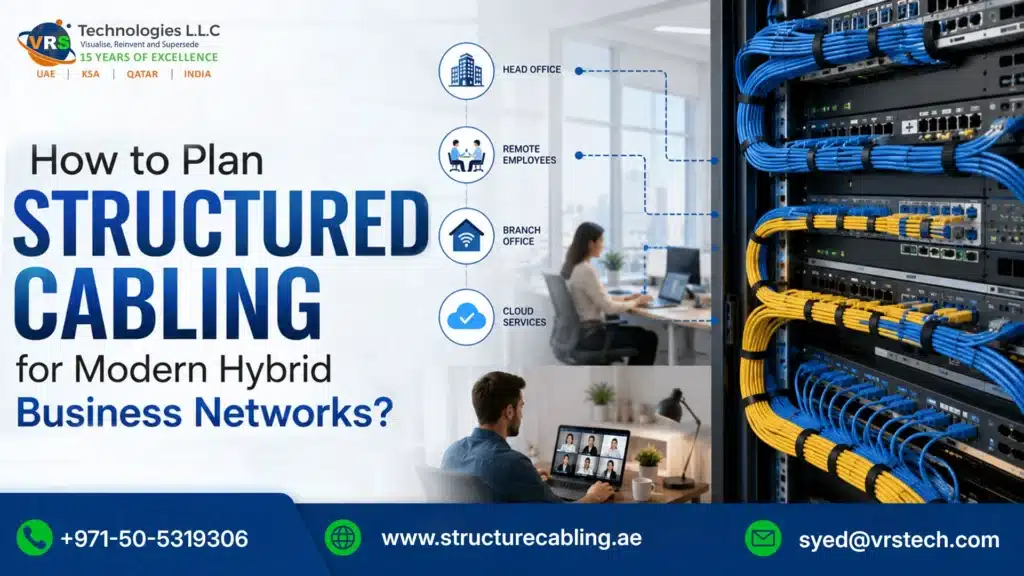
How to Plan Structured Cabling for Modern Hybrid Business Networks?

How to Plan Structured Cabling for Modern Hybrid Business Networks? Read Post »

Businesses today rely on a mix of office-based and remote employees, making hybrid networks more common than ever. A reliable network starts with proper cabling, which is why many organizations invest in Structured Cabling Installation in Dubai to support smooth communication, secure data transfer and future business growth. VRS Technologies LLC provides professional structured cabling solutions designed for businesses of all sizes across the UAE. Structured Cabling Guide for Hybrid Networks: A Step-by-Step Guide Step 1: Understand Your Network Requirements Before installing any cables, identify your current and future networking needs. Consider the number of employees, workstations, servers, IP phones, wireless access points, CCTV cameras and other connected devices. Planning ahead helps avoid expensive upgrades later. Step 2: Choose the Right Cabling Selecting the correct cable type is important for network performance. Cat6 and Cat6A cables are widely used for their high-speed data transmission and support for modern business applications. Fiber optic cables are ideal for longer distances and higher bandwidth requirements between buildings or server rooms. Step 3: Design a Proper Network Layout A structured layout keeps the network organized and easy to maintain. Plan cable routes carefully, identify rack locations and allow space for future expansion. Every cable should have a clear destination to reduce confusion during maintenance or troubleshooting. Step 4: Install Quality Server Racks and Patch Panels Server racks protect networking equipment and improve airflow. Patch panels help organize cable connections and make changes easier without disturbing the entire network. Proper cable management also reduces wear and improves system reliability. Step 5: Label Every Cable Cable labeling may seem like a small task, but it saves significant time when diagnosing network issues. Clearly marked cables allow IT teams to quickly identify connections, reducing downtime during maintenance or upgrades. Step 6: Test the Entire Network Every cable should be tested after installation to verify speed, connectivity and signal quality. Network certification tools help ensure the installation meets industry standards and performs as expected before the system goes live. Step 7: Plan for Future Growth Technology changes quickly. Businesses often add more employees, devices and cloud services over time. Installing extra cable capacity and choosing scalable infrastructure allows the network to grow without major disruptions or costly rewiring. Key Components of a Hybrid Cabling System Entrance Facilities – Where external cables connect to your building Equipment Room – Central hub for switches, servers and patch panels Backbone Cabling – Fiber links between floors and buildings Horizontal Cabling – Cat6A connections to work areas and access points Telecommunications Rooms – Intermediate connection points Work Areas – Outlets for user devices Final Thoughts Hybrid workspaces need hybrid cabling. A well-designed system combines Cat6A copper for flexibility and fiber for speed and distance. Professional installation ensures performance and future-proofing. For reliable Structured Cabling Installation in Abu Dhabi and across the UAE, choose a partner with expertise in hybrid network design. VRS Technologies LLC delivers professional structured cabling solutions for modern hybrid offices. Visit www.structurecabling.ae to learn more. Call +971-50-5319306 to schedule a site survey and get a customized cabling plan for your office today.

Structured Cabling Solutions in UAE

How to Find the Best Structured Cabling Company in Dubai?

How to Find the Best Structured Cabling Company in Dubai? Read Post »

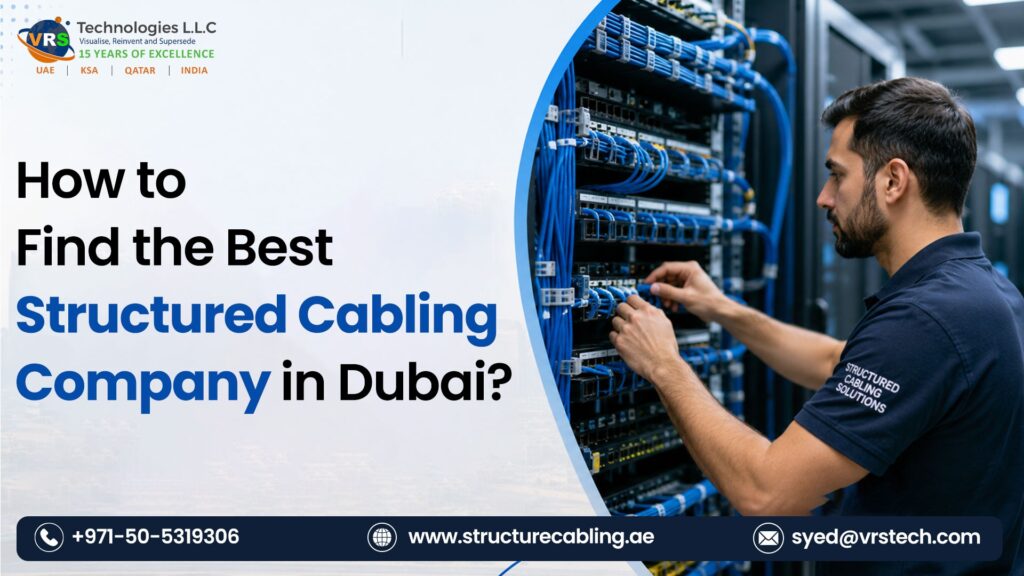
Your business runs on data. Every email, every video call, every file transfer travels through cables hidden inside your walls and ceilings. If those cables are poorly installed, your network suffers. Slow speeds. Frequent dropouts. Costly downtime. That is why choosing the right cabling company matters so much. Many businesses in the UAE learn this lesson after a bad installation. VRS Technologies LLC provides expert Structured Cabling in Dubai and helps businesses understand what to look for in a cabling partner. What Is Structured Cabling? Structured cabling is the complete system of cables, connectors, and hardware that carries data throughout your office or building. It is the backbone of your entire network. A properly designed system supports fast speeds, easy changes, and years of reliable service. A good structured cabling system includes: Copper Ethernet cables (Cat6, Cat6a, or Cat7) Fiber optic cables for longer distances Patch panels and network racks Wall outlets and ceiling access points Proper cable management and labeling Signs of a Bad Cabling Installation Before talking about what to look for, know what to avoid. Red flags: Cables running loosely across floors or ceilings No labels on cables (you cannot tell which cable goes where) Tight bends or kinks in cables Cables bundled too tightly with zip ties No service loops for future changes No testing documentation provided A poorly installed system looks messy and performs poorly. What to Look for in a Structured Cabling Company Experience and Certifications Ask how many years they have worked in the UAE. Look for certifications from major brands like CommScope, Siemon, or Panduit. Certified installers follow strict standards. Site Survey First A professional company never quotes without visiting your location. They measure distances, check for interference sources, and plan cable paths. No site visit means no reliable quote Testing and Documentation After installation, every cable should be tested. You should receive a report showing each cable passed speed and signal quality tests. Without testing, you cannot prove the installation works correctly. Warranty Reputable companies offer a warranty on both parts and labor. Typically 10 to 25 years for certified installations. References Ask for the contact details of recent clients. Call them. Ask if the installation was on time, on budget, and problem-free. Questions to Ask Before Hiring Question Why It Matters Do you perform a site survey? Ensures accurate planning What cable brands do you use? Quality brands last longer Do you provide test results? Proof of proper installation What is your warranty? Protection against future issues Have you worked in my building type? Experience with similar layouts The Cost of a Bad Choice A poor cabling installation costs more than just the initial payment. You pay for: Repeated service calls to fix problems Lost employee productivity from a slow network Cost of ripping out bad cables and starting over Choosing the right company the first time saves money. Final Thoughts Your network is only as strong as the cables behind your walls. A professionally structured cabling installation ensures fast speeds, zero downtime, and easy future upgrades. Do not trust this critical work to inexperienced contractors. For reliable Structured Cabling in Abu Dhabi and across the UAE, choose a company with experience, certifications, and a track record of quality. VRS Technologies LLC delivers end-to-end Structured Cabling Solutions in UAE, including design, installation, testing, and warranty coverage. Visit www.structurecabling.ae to learn more. Call +971-50-5319306 to schedule a free site survey and get a detailed quote for your office or facility today.

Network Cabling Company Dubai

The Importance of Network Infrastructure for Fuel Stations and Truck Stops

The Importance of Network Infrastructure for Fuel Stations and Truck Stops Read Post »

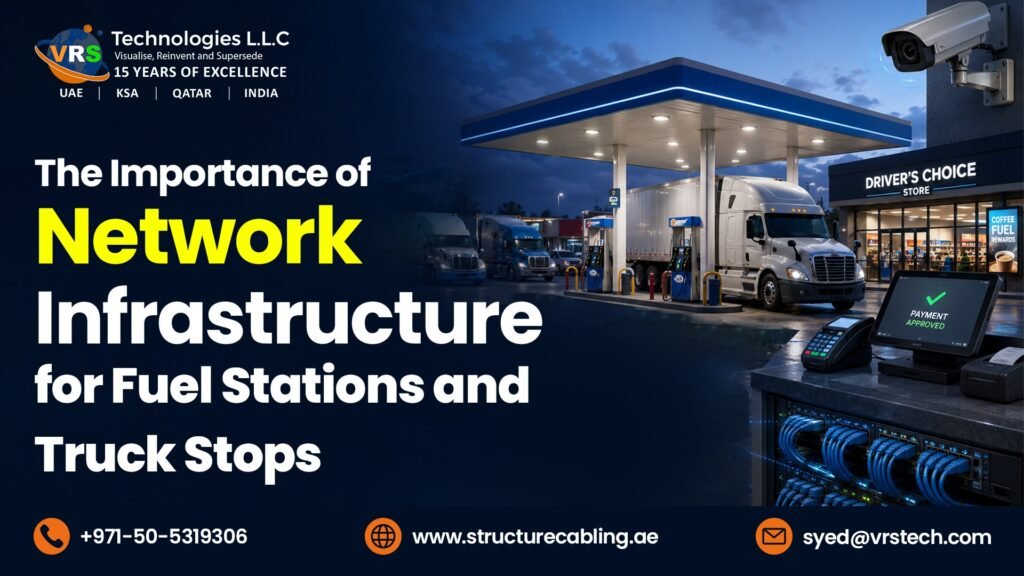
A truck driver pulls into a fuel station. He inserts a card at the pump. Fuel flows. The payment processes in seconds. Inside, the cashier sees the transaction live. Security cameras record everything. The driver buys a meal, pays again, and returns to his truck. All of this happens smoothly because of network cabling hidden behind walls and underground. Without proper cabling, pumps stop working, payments fail, and drivers leave frustrated. VRS Technologies LLC provides professional network cabling that keeps truck stops running efficiently. Why Truck Stops Need Reliable Cabling Truck stops are not simple gas stations. They are complex operations. What happens at a modern truck stop: Multiple fuel pumps processing payments simultaneously Convenience stores with POS systems Restaurants and food courts Truck parking monitoring systems Driver loyalty programs and fleet cards Security cameras covering the entire site WiFi for drivers resting overnight Every single one of these services depends on network cabling. How Cabling Powers Fuel Operations Fuel pumps contain computers that track fuel flow, calculate costs, and communicate with the central system. Cables connect each pump to: The main price display board The indoor POS terminal The fleet card authorization network The fuel inventory management system If the cabling fails, pumps go offline. Drivers cannot fuel. Revenue stops. Payment Systems – Speed and Security Truck drivers do not want to wait. They insert a card, pump fuel, and leave within minutes. Behind the scenes, cabling carries payment data from the pump to the processor and back in seconds. Cabling supports: Credit and debit card readers at each pump Fleet card authorization for trucking companies Contactless payment systems Receipt printers Secure encryption of card data Poor cabling can lead to slow authorizations or failed transactions. Drivers drive away. They do not come back. Driver Services That Rely on Cabling Truck stops offer more than fuel. Drivers need rest, food, and connectivity. Service How Cabling Helps Restaurant POS Sends orders to kitchen, processes payments Store checkout Scans items, updates inventory Driver WiFi Connects access points to internet Restroom sensors Monitors supplies and alerts staff Parking cameras Tracks available spaces, deters theft Outdoor Cabling Challenges Truck stop cabling faces tough conditions. Challenges include: Extreme heat from direct sunlight Moisture from rain and humidity Vibration from heavy trucks Potential damage from vehicles Long distances between pumps and the main building Professional installation uses outdoor-rated, armored cables buried in conduit. This protects against weather, crushing, and accidental digging. Final Thoughts A truck stop is a small city of connected devices. Pumps. Payment terminals. Cameras. WiFi access points. Every one of them depends on network cabling to function. When cabling fails, everything stops. Drivers leave. Revenue disappears. For expert Network Cabling Company in Dubai, choose a provider that understands commercial and industrial needs. VRS Technologies LLC delivers professional network cabling for truck stops, gas stations, and commercial sites across the UAE. Visit www.structurecabling.ae to learn more. Call +971- 50-5319306 to schedule a site survey and get a customized cabling plan for your facility today.

Network Cabling Company Dubai

What is the Difference Between Shielded and Unshielded Cable?

What is the Difference Between Shielded and Unshielded Cable? Read Post »

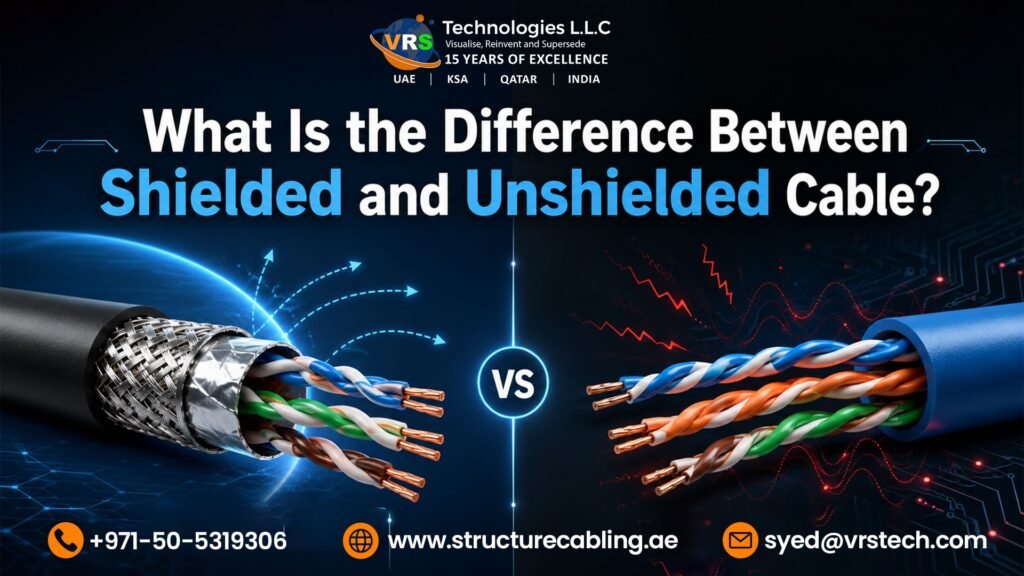
A slow or unstable network is frustrating. Web pages take forever to load. Video calls freeze constantly. File transfers fail halfway. Often, the problem is not your internet plan or your router. It is the cable running through your walls or under your desk. Many business owners do not realize that choosing the wrong cable type causes these exact issues. VRS Technologies LLC provides professional Network Cabling in Dubai and helps businesses understand the difference between shielded and unshielded cables. What Are Shielded and Unshielded Cables? Both cable types carry data from one device to another. The difference is a protective layer. Unshielded Twisted Pair (UTP) – This is the most common cable type. It has four pairs of copper wires twisted together. No extra shielding exists around the wires. Shielded Twisted Pair (STP) – This cable has the same twisted wire pairs plus an additional protective layer. The shield is usually made of foil or metal braid around the wires. The Key Differences at a Glance Feature Unshielded (UTP) Shielded (STP) Protection from interference Low High Cost Lower Higher Flexibility More flexible Stiffer due to shielding Installation difficulty Easy More complex Best for Homes, small offices Factories, hospitals, data centers When to Use Unshielded Cable UTP cables work perfectly in most standard office environments. Good for: Regular office spaces with no heavy machinery Homes and small businesses Short cable runs (under 50 meters) Budget-conscious projects UTP is reliable, affordable, and easy to install. For most small to medium businesses, this is all you need. When to Use Shielded Cable Shielded cables become necessary when electrical interference is present. Sources of interference: Heavy motors and generators Fluorescent lighting fixtures Elevator shafts Air conditioning units Factory equipment Radio transmitters If your cables run near any of these, interference creeps in. Data gets corrupted. Speeds drop. Connections become unstable. Shielded cables block that interference completely. Also ideal for: Hospitals with medical equipment Data centers with dense cable bundles Industrial facilities Outdoor cable runs Long cable runs over 50 meters The Cost of Choosing Wrong Saving money on unshielded cable in a noisy environment backfires. Your network becomes slow and unreliable. Employees waste hours waiting for files. Wasting money on shielded cable in a clean office environment is also foolish. You pay extra for protection you do not need. Installation Matters Shielded cable requires proper grounding. If the shield is not correctly grounded, it acts like an antenna and attracts more interference. This is why professional installation is critical. Final Thoughts Choosing between a shielded and an unshielded cable is simple. Ask yourself: Does my cable path pass near motors, lights, or heavy equipment? If yes, choose shielded. If not, unshielded works perfectly. For professional Network Cabling Installation in Dubai, trust experts who understand interference, grounding, and performance. VRS Technologies LLC provides complete Network Cabling Company Dubai, including site surveys, cable selection, installation, and testing. Visit www.structurecabling.ae to learn more. Call +971-50-5319306 to schedule a cabling consultation for your office or facility today.

Fiber Optic Cabling

How Fiber Optic Cable Improves Business Network Performance?

How Fiber Optic Cable Improves Business Network Performance? Read Post »

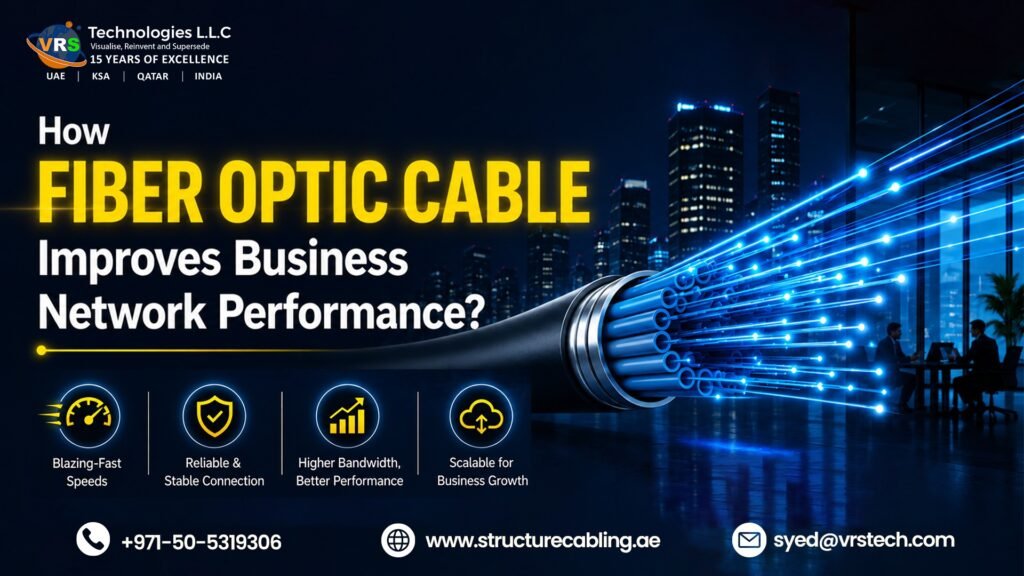
Fast and stable business communication depends on a strong network infrastructure. Many companies now prefer Fiber Optic Cabling in Dubai because it delivers better speed, stronger signals and long-term reliability. VRS Technologies LLC provides complete structured cabling solutions that help businesses build high-performance networks for smooth daily operations. When using a traditional cable, you may experience signal loss and slower cable velocity when moving cables over a long distance between cameras. The solution with fiber-optic cables uses light signals to transmit information, enabling faster, safer data transfer with fewer interruptions. Why Fiber Optic Cabling Matters Cloud solutions, video conferencing, smart business tools and large file sharing are crucial for modern offices. A slow network will impact productivity and customer service. Fiber optic cables offer: Faster internet speeds Higher bandwidth capacity Stable long-distance performance Better protection against interference Improved data security This enables fiber technology to enable any enterprise to thrive even in situations that call for steady performance. How Fiber Optics Works Fiber Optic fibers are small strands of glass or plastic through which data is carried as light pulses. This process allows: Very fast data transfer Low-latency communication Better signal quality Reliable large-scale connectivity All of these are features that make the fiber option the favored choice for any office that needs to communicate digitally smoothly. Key Benefits for Businesses Better Speed and Efficiency – Employees can work faster with smooth system access, quick downloads and uninterrupted communication. Future Scalability – Fiber supports expanding business needs without major upgrades. Reduced Downtime – Fiber cables are highly reliable and resist environmental interference. Stronger Security – Data transmitted over fiber is harder to intercept than data transmitted over traditional copper cabling. Where Fiber Optic Is Commonly Used Fiber optic networks are widely installed in: Corporate offices Data centers Educational institutions Healthcare facilities Retail chains Industrial operations These sectors need network stability to carry out their daily operations. Why Professional Installation Matters The importance of professional installation.The significance of the professional installation. All good cables will go bad if mishandled. Type the right plan and it will give optimal network performance! Professional installation includes: Site inspection Cable pathway planning Proper routing and labeling Performance testing Future expansion design Correct installation reduces repair costs and improves network life. Why Businesses Choose VRS Technologies LLC With 15+ years of industry experience, VRS Technologies LLC provides professional cabling services throughout UAE with professional technical support. Benefits include: Experienced installation engineers High-quality fiber infrastructure Fast project completion Affordable business packages Ongoing maintenance support The team guarantees that all projects are delivered, up to code and safe. Final Thoughts Strong network performance depends on choosing the right infrastructure for long-term business growth and smooth communication across all digital operations. VRS Technologies LLC provides reliable Fiber Optic Cabling in Dubai for businesses looking for secure and high-speed connectivity solutions. Contact us at +971-50-5319306, or visit www.structurecabling.ae for professional fiber optic cabling support and advanced network infrastructure services. FAQs Why is fiber optic cabling better than traditional copper cables? Fiber-optic cables offer high performance and better reliability over long distances, with high-speed, high-quality signal transmission and their installation and maintenance are also relatively simple. Where is fiber optic cabling commonly used? It is commonly used in offices, data centers, hospitals, schools and in large business networks. How long does fiber optic installation take? The time to install varies by project size, but most commercial installations take a few days. Why choose professional fiber optic installation services? Properly set up, better performance, less downtime and network reliability in the long run are benefits of professional installation.

How Can I Help You
Scroll to Top